6 July 2026 · BotShark Team
The account following 40,000 people that 200 people follow back
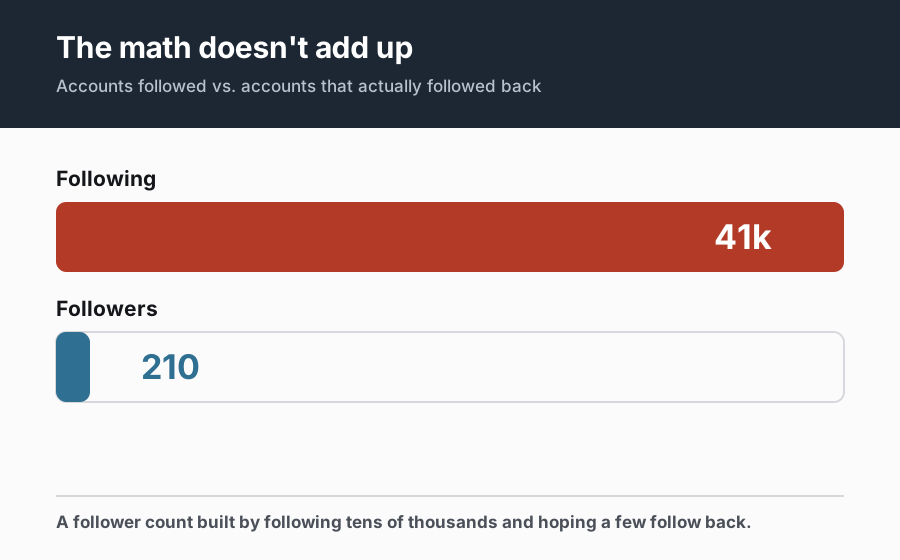
A follow-for-follow growth account builds a following the cheap way — following tens of thousands and hoping a fraction follow back. Real audiences grow two-directionally; this math is almost always visibly lopsided.

Open an account's profile and check the two numbers at the top: followers, and following. For most real people, those numbers are at least in the same neighborhood, or the follower count is higher because that's generally how organic reach works — you get followed more than you follow once you've been around a while and said things people found worth sticking around for.
Then you find an account following thirty or forty thousand people, with a follower count in the low hundreds. That's not a person who's just really interested in a lot of accounts. That's what we call a follow-for-follow growth account, and it's one of the oldest, cheapest tricks in the book.
What it's actually doing
The mechanic is simple and has existed in some form since the earliest days of social platforms: follow a huge number of accounts, on the bet that some meaningful percentage will follow back out of politeness, reciprocity, or just not noticing. Some operators run this on a loop — follow a batch, wait, unfollow whoever didn't reciprocate, follow a new batch, repeat — which is why you'll sometimes see an account's following count swing wildly over time even while its actual follower count barely moves.
The shape is easy to spot once you're looking at the two numbers directly:
A following count that's dramatically higher than the follower count — not "a bit more," but often by one or two orders of magnitude.
A following-to-follower ratio that sits far outside what a normal account looks like, especially for accounts that aren't otherwise notable enough to explain following that many people out of genuine interest.
Why this pattern exists at all
It's the cheapest way to inflate the appearance of an audience, or at least to try to bootstrap a real one. Follow ten thousand people, get five hundred follow-backs, and you've built the beginning of a follower base for free — no content, no engagement, no actual reason anyone should care, just raw volume applied to a system that nudges people toward reciprocating.
And the actual numbers are strikingly bad, which is part of why this tactic reads as an obvious bot signature once you know to look for it. A 2018 academic study that modeled the follow/unfollow mechanic using game theory found bot accounts running this strategy got follow-back rates of roughly 0.76% to 0.86% — meaning an account following ten thousand people would organically expect somewhere around 80 real follow-backs, not the thousands a real, well-liked account would earn the normal way (ResearchGate, "A Game Theoretic Analysis of the Twitter Follow-Unfollow Mechanism"). More recent academic work specifically studying "follow back" account clusters on social platforms has found the pattern is common enough, and detectable enough, to build dedicated detection systems around (arXiv, "#TeamFollowBack: Detection & Analysis of Follow Back Accounts on Social Media").
How BotShark spots it
This one's mostly arithmetic, which makes it one of the more straightforward patterns to catch reliably: we look at the ratio between who an account follows and who follows it back, and how extreme that imbalance is relative to normal accounts. A wildly lopsided ratio, especially on an account that isn't otherwise notable enough to explain following tens of thousands of people out of genuine interest, is a strong, simple signal — and it's one that combines well with other patterns, since accounts running this kind of growth automation often show other automated behaviors too.
What to do if you spot one
Don't read the follower count as a signal of anything. An account that got there by mass-following is not popular in any meaningful sense — it just ran the numbers game long enough that some people followed back. If you're using follower count as a shortcut for "this account matters" or "this account has real reach," this is exactly the pattern that shortcut fails on.